


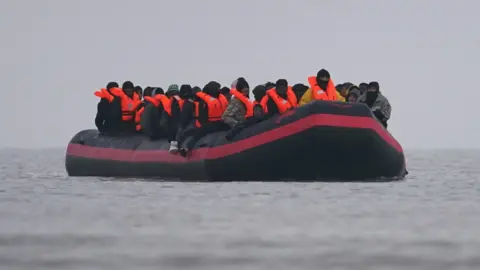
France has agreed to start stopping small boats in the Channel, after an extended period of pressure from the United Kingdom.
This policy shift comes after the Prime Minister sent a letter to the French leader urging him to support the plan and saying there currently "have no effective deterrent" in the Channel.
French security forces have been authorized to intercept the migrant vessels at sea, but only before they've picked up their migrants, according to authoritative confirmation.
French police have rarely intervened to prevent the heavily loaded boats leaving the shoreline because it is viewed as too great a danger to both officers and civilians.
"It is essential that we deploy these tactics this month... We have no effective deterrent in the Channel."
Now, a French maritime police representative says officers will begin intervening at sea, with the objective of safeguarding lives.
Notably, the spokesperson excluded the use of nets to intercept boats, which had earlier been reported as a possible technique to snarl the propellers of the vessels.
The decision to intervene at all is a major advancement, coming after a short-lived shift towards a more aggressive strategy this summer, which dropped off when the previous government official departed from office.
This was demonstrated in the summer month, in the run-up to a summit between the UK leader and French president, when authorities were witnessed walking into the sea to damage the hulls of a vessel.
Now French authorities will again be permitted to stop boats prior to they collect migrant passengers from the beaches of France's north coast, although it's not clear how the vessels will be stopped.
Strong winds are presently delaying the commencement of interceptions and the people-smuggling networks will be seeking ways to adapt to evade detection, as they have frequently done in the past.
The Home Office and the Prime Minister's office have been contacted for response.
Related Developments
- Why UK can't just send back migrants to France
- France withdrawing from commitment to intercept asylum boats



